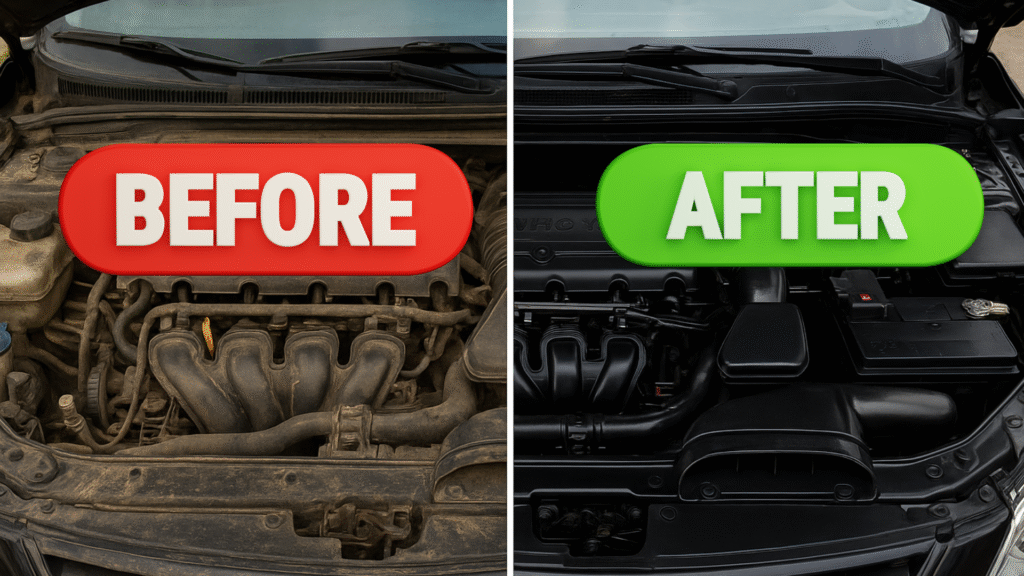

Beware Before Cleaning Your Car Engine
Nowadays, car engines have become far more complex in their functionality. Beneath the shiny hood lies a network of delicate sensors — including the common rail pressure sensor, fuel mass flow rate sensor, air flow mass rate sensor, and turbo sensor. Together, these components are quite expensive, which is why you need to be extremely cautious while cleaning.
Personally, we prefer to gently clean the outer part of the engine using a clean cloth and remove any oil leakage with diesel.
With today’s technological advancements, car engines come equipped with advanced electronic systems — and one wrong step can lead to costly damage. So, if you’re unsure or inexperienced, it’s best to avoid deep cleaning on your own. Sometimes, less truly is more when it comes to keeping your engine safe and spotless.
Here, we’re going to explain the correct way to clean your car engine. A common question people usually whether it’s safe to clean the engine with water. If you follow the right method, your engine will shine like new.one
Before cleaning the engine, make sure that the engine oil cap, windshield washer cap, and fuse box cover are properly fitted. If they aren’t sealed correctly, water may enter the engine. Most manufacturers already provide protection for the wiring and other components — just remember not to spray too much water on the car’s alternator.
Materials & Tools Needed
- Degreaser or engine cleaner
- Water supply (hose, spray)
- Brushes (soft bristle, narrow ones for tight spots)
- Microfiber cloths or rags
- Protective covering (plastic / bags) for sensitive engine parts (electrical components, air intake, exposed wiring)
- First step
Mix the ditergent and shampo in empty bottler, which is best way to spray water on engine, its enough to clean the entire engine from halt leter of soluble mixture
( Make sure that the car’s engine is not hot — it should be completely cool )
- Second step
Now we start the second step you followed to You have to spray a little water on the engine. “If you pour too much water, it might get into the fuses or other components 2) Two mugs of water are enough to make the engine slightly wet, Remember, you should not use too much water on the engine.
- Third step
You need to apply the brush where there is oil, dust, or grease. The benefit of using a brush is that it easily reaches the tight corners and cleans them thoroughly. Make sure you don’t leave any corner — move the brush as deep as it can go. This whole process will take around 3 to 4 minutes
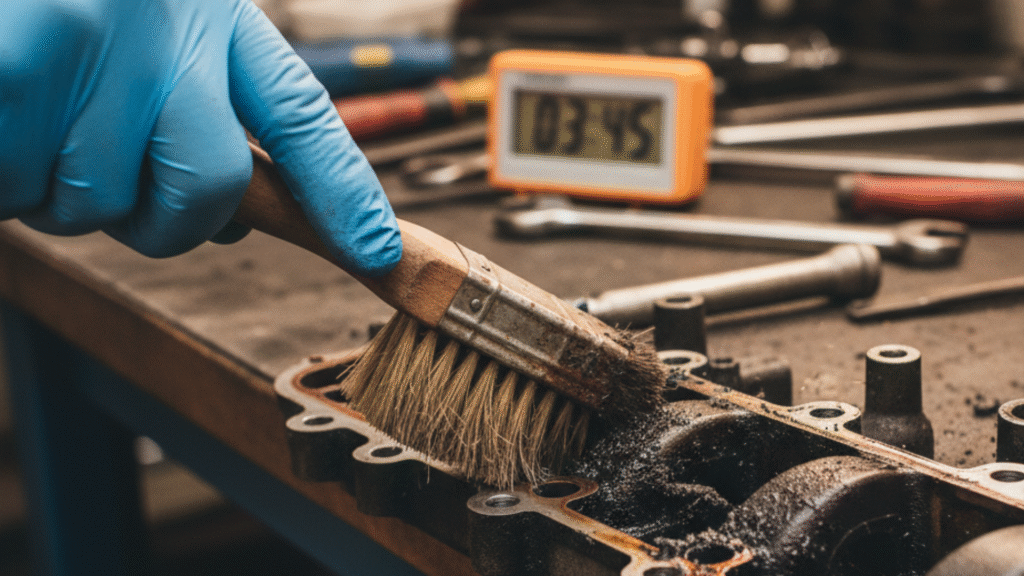
After applying it once, you need to apply it again. Then, leave the engine for about 5 minutes. Take one liter of water and mix detergent in it well so that it forms enough foam. Apply this foamy mixture over the diesel-based liquid that we applied earlier. Now, clean it with a cloth as far as your hand can reach, and make sure to wipe the entire area properly with the cloth
· Precautions & Tips
- Avoid directly spraying high-pressure water at electrical parts, sensors, and engine openings.
- Always wear gloves and protective gear where needed.
- Do not clean when engine is hot — risk of damage or burns.
- Use quality degreaser that’s safe for engine materials.
- After cleaning, start the engine briefly to help evaporate any residual moisture.
· Conclusion / Final Thoughts
- With routine care and correct technique, the engine bay can remain clean, help in easier detection of leaks, and enhance the visual appeal.
- Maintenance and periodic cleaning are key for both performance and aesthetics.